How to Store Delicate Clothes So They Last
What to hang, what to fold and how to keep moths out, with storage habits borrowed from museum conservators.

Knowing how to store clothes properly comes down to four rules: put them away clean, give each fabric the right support, let them breathe, and disturb them often enough that moths never settle. Knitwear and anything heavy or bias cut should be folded; tailoring and structured dresses should hang on shaped hangers; lace and silk need tissue and space.
Good storage prevents much of the stretching, creasing and moth damage that shortens a garment's life. Here is how to get it right.
How to store clothes: start clean
Always put clothes away clean. Food, perfume and body oils attract insects and can set into stains over time. The English Heritage guide to preventing clothes moths notes that soiled textiles are attacked first, and that a stained patch can be damaged more than a clean one.
Clean does not always mean washed. For a dress worn for a few hours, airing it overnight on a hanger near an open window is often enough. Spot-clean marks as soon as you see them. When something does need washing, check the label first; our guide to dry clean or hand wash explains what each symbol means.
Folding vs hanging
The folding vs hanging question is the heart of how to store clothes well, and it depends on how a garment is made and how much it weighs.
Hang:
- Blazers, coats and tailored trousers, on shaped wooden hangers that fill the shoulder.
- Structured dresses with a lining or boning.
- Shirts and blouses in crisp fabrics such as cotton poplin.
Fold:
- All knitwear, from fine merino to chunky cable.
- Bias-cut dresses and skirts, which stretch out of shape under their own weight.
- Heavily beaded or embellished pieces, which pull at the shoulders.
- Jersey, which droops and grows longer on a hanger.
If you are unsure, pinch the shoulder of the garment on the hanger and let go. If the fabric drags downwards or the neckline gapes, fold it.
Hangers and covers
Wire hangers from the dry cleaner leave dents and rust marks, so swap them as soon as you get home. Choose wooden hangers shaped like shoulders for tailoring, and padded hangers for silk and fine dresses. For strappy dresses, use the hanging loops sewn inside the waist so the straps take no weight.
Plastic dry-cleaning bags trap moisture and can encourage mildew. Use breathable cotton garment bags instead, or an old cotton pillowcase with a hole cut for the hanger. Leave a little space between pieces on the rail so air can move and nothing gets crushed.
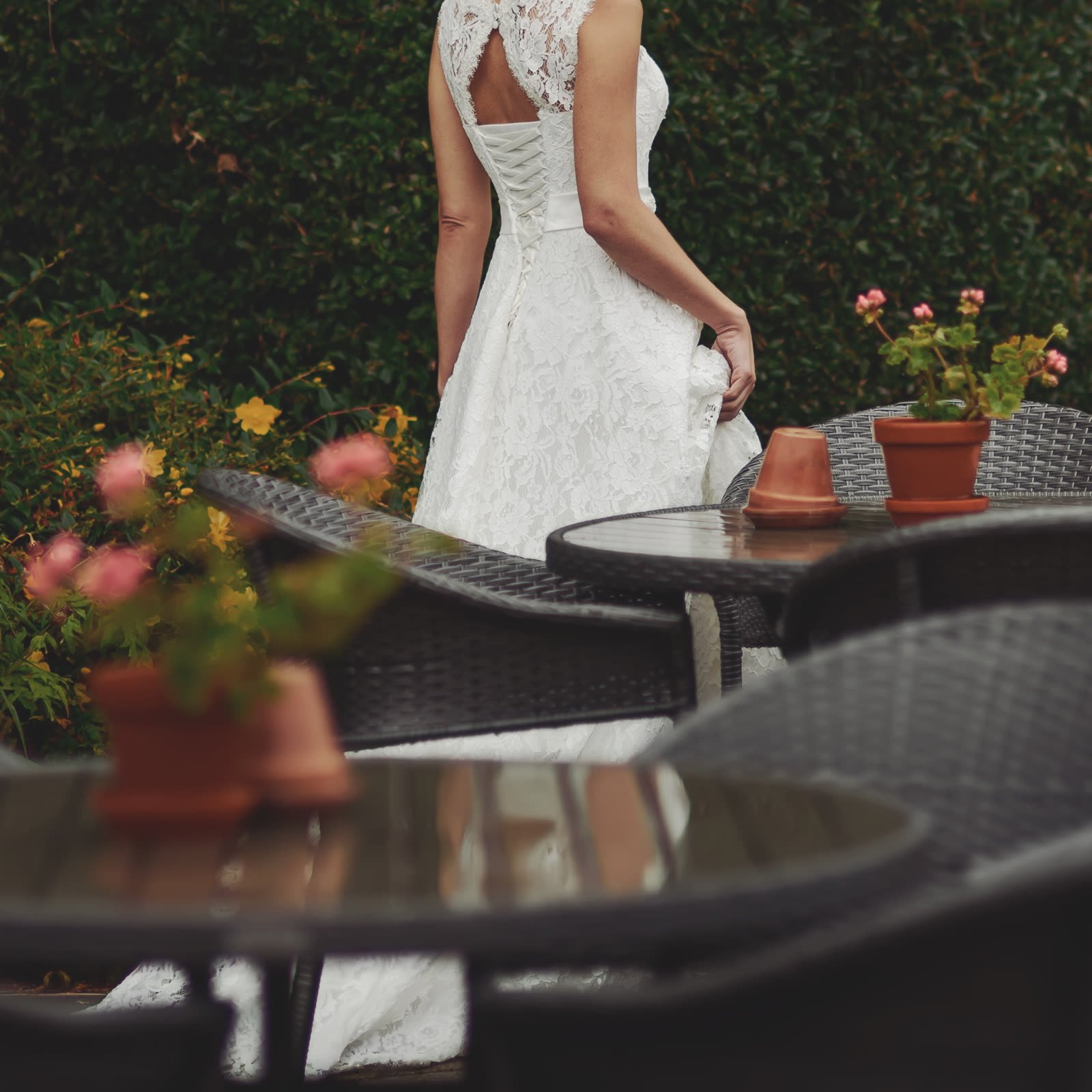
How to store delicate clothes like lace and silk
Lace snags on zips, hooks and rough wood, so how you store delicate clothes matters more than with everyday pieces.
- Fold lace with acid-free tissue between the layers and along each fold line, so creases stay soft.
- Change where you fold from time to time; fabric weakens along the same crease.
- Keep lace away from Velcro, sequins and metal fastenings on neighbouring clothes.
- Store silk out of direct sunlight, which fades dyes and weakens the fibres.
- Give lace its own space in the drawer, on top of the pile, so heavier pieces do not press it flat.
For washing and stain advice specific to lace, see our guide on how to care for lace.
How to store knitwear
Knitwear is the most vulnerable thing in most wardrobes, partly because hanging stretches it and partly because moths love wool and cashmere. Here is how to store knitwear well.
Fold each jumper with the sleeves crossed over the back, then fold in half or thirds. Stack no more than three or four high so the bottom piece is not crushed. For long-term storage, use boxes with tight lids or sealed bags; English Heritage suggests vacuum bags as particularly good protection against insects, damp and dust.
Brush wool knits gently with a clothes brush before you put them away. It lifts dust and any eggs, and it keeps the surface neat.
Keeping moths away
Clothes moths are a museum problem as much as a domestic one. A National Museum Wales article on the clothes moth explains that the adult moths do not eat; the damage is done by the larvae, which digest keratin, the protein in wool, fur and feathers. They prefer dirty, undisturbed places, and warm, damp homes suit them well.
The good news is that the same habits that keep clothes looking good also deter moths:
- Take out and shake hanging clothes at least once a month, as English Heritage recommends. Moths dislike being disturbed.
- Vacuum the floor and corners of wardrobes and drawers regularly.
- Check the hidden places: under collars, in armpits, behind lapels and inside pockets.
- Use pheromone traps to monitor rather than treat. They attract male moths, so they tell you a problem exists without solving it.
- If you find damage, the Museum Wales article describes freezing sealed items for two to three days to kill eggs and larvae, a method museums use. Let items return to room temperature slowly before you open the bag.
A seasonal routine
The last part of how to store clothes is a routine. Twice a year, as the weather turns, take everything out of the wardrobe. Clean what needs cleaning, mend small problems, and pack the out-of-season pieces away in boxes or bags. It is also the moment to see what you actually wore, which makes it easier to plan an evening capsule wardrobe that suits your life.
Our first collection includes lace, tailoring and fine knitwear, and we think about how pieces will be kept as well as worn. You can read about how we make our pieces at Notte & Noir, or join the list for launch news.