How to Wear a Blazer Dress, Day to Night
How to wear a blazer dress from the office to dinner, with tips on fit, layering, tights, shoes and the tuxedo dress for evening.
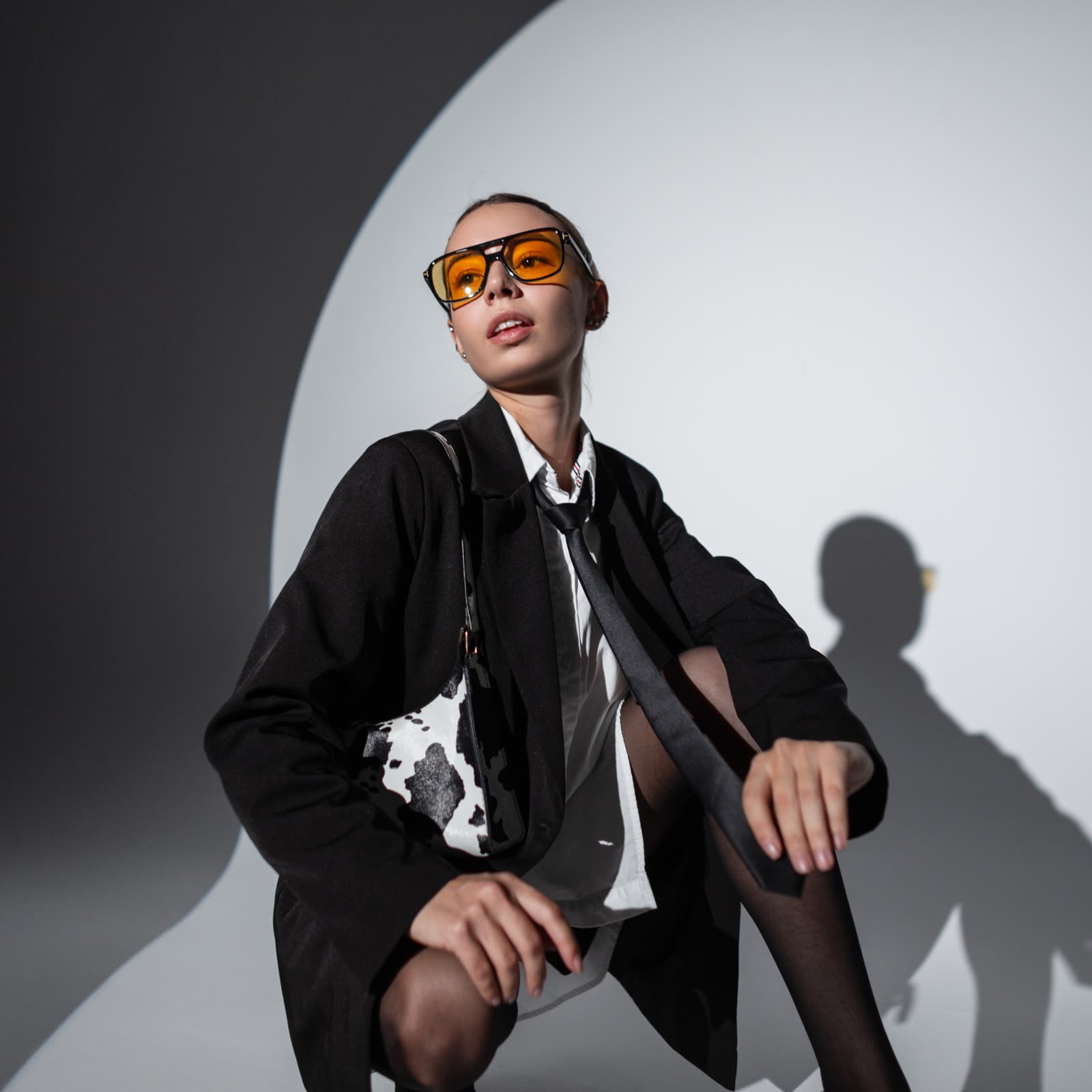
A good blazer dress outfit needs very little: the dress itself, the right shoes and one or two accessories that set the tone. By day, wear it with sheer black tights and loafers or ankle boots; by night, swap to bare legs or fine tights, heels and statement earrings. The tailoring does the rest, which is why it is one of the most efficient pieces you can own.
Where the blazer dress comes from
The blazer dress borrows from a long line of menswear tailoring adapted for women, and the most famous ancestor is Yves Saint Laurent's Le Smoking. Shown in 1966, the women's tuxedo initially unsettled his haute couture clients and sold only a single couture order at first, according to Numéro's history of Le Smoking. It found its audience through his Rive Gauche ready-to-wear boutique, which opened in September 1966, and the house went on to make close to 230 versions over the years.
Saint Laurent also turned the smoking jacket into evening dresses. The Kyoto Costume Institute holds one from autumn/winter 1986: a single-breasted jacket in black silk satin with a white satin peak lapel, worn as a dress (Google Arts & Culture: Smoking Jacket, Yves Saint Laurent). That is essentially the tuxedo dress that appears in evening collections today.
Choosing a blazer dress that fits
Because a blazer dress is tailored, fit makes all the difference. Look for:
- Shoulders that sit at your natural shoulder line. Slightly extended is fine for a modern look; collapsing past your arm is not.
- A defined waist. Darts, a belt or a wrap fastening keep it from looking like a borrowed jacket.
- Enough length to sit down. Test it in a chair. Many blazer dresses are cut short, and a few extra centimetres make a big difference to comfort.
- A secure front. Double-breasted styles or a hidden popper at the cleavage stop the lapels gaping.
If a blazer dress fits everywhere except the waist, a tailor can take in the side seams cheaply. Shortening the sleeves is also a quick job.
How to style a blazer dress for daytime
During the day, the aim of a blazer dress outfit is to look like workwear rather than a jacket worn without trousers.
Tights and shoes
Sheer or opaque black tights are the easiest daytime partner. Pair them with loafers, block-heel courts or sleek ankle boots. Knee-high boots work well in winter and cover the gap between hem and shoe.
Layers underneath
A fine-knit polo neck under a blazer dress looks smart in cold months and solves any neckline worries. A crisp white shirt with the collar out gives a more preppy feel. If you love tailoring layers, our guide to waistcoat outfits for women shows how to stack a vest and jacket pieces.
Bags and jewellery
Choose a structured shoulder bag or tote and small jewellery: gold hoops, a signet ring, a watch. Leave statement pieces for later.
The blazer dress outfit for evening
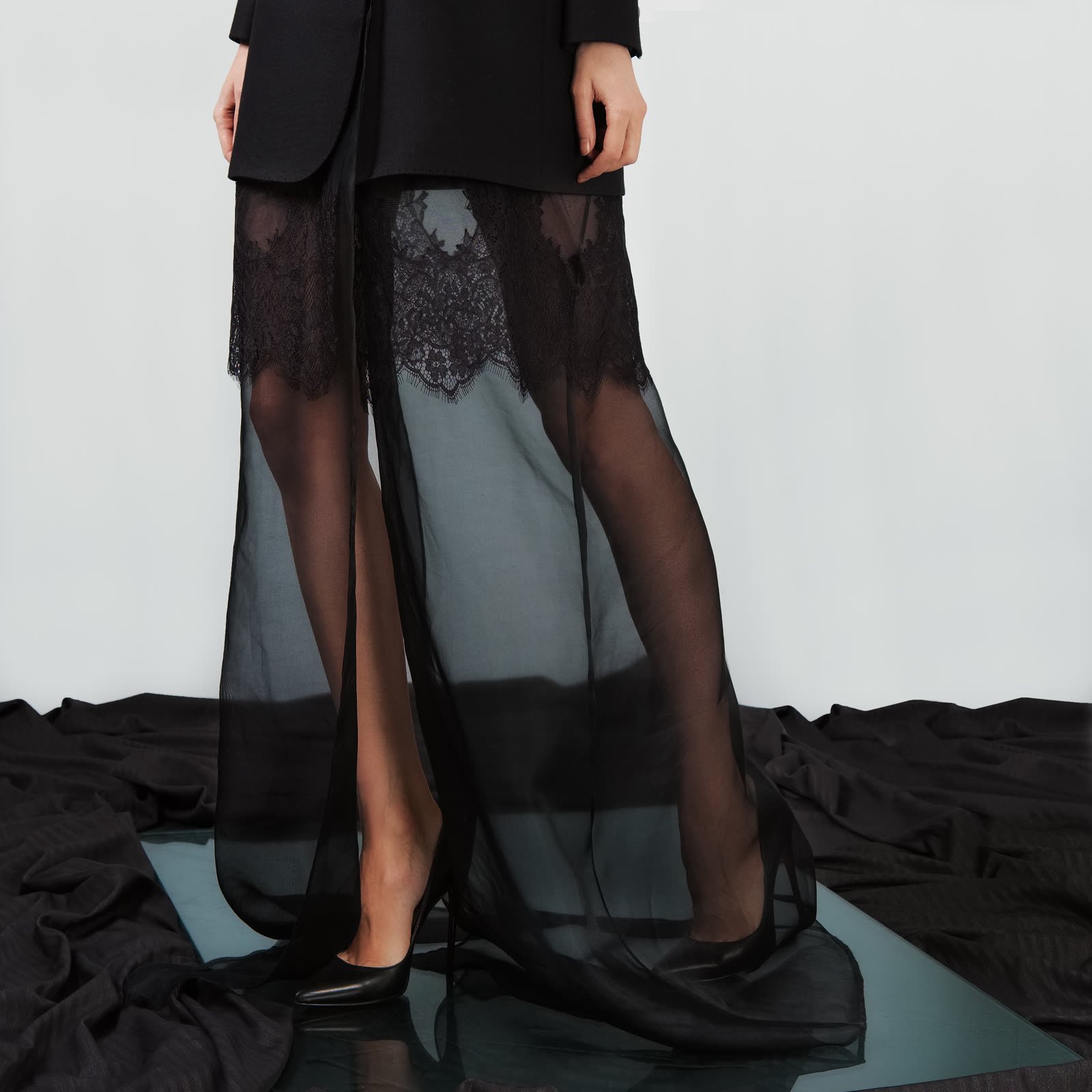
This is where the blazer dress really comes into its own. Take off the polo neck and the tights, and you have an outfit with sharp lines and a little skin.
- Change the shoes. Pointed slingbacks, strappy sandals or a satin court instantly make it after-dark.
- Add one statement. Long drop earrings, a brooch on the lapel or a bold cuff. One is enough.
- Consider the neckline. A lace bralette or camisole peeking from the lapels softens the tailoring. Our piece on pairing lace and tailoring goes deeper into this combination.
- Belt it. A slim leather or satin belt changes the shape and gives a more feminine line.
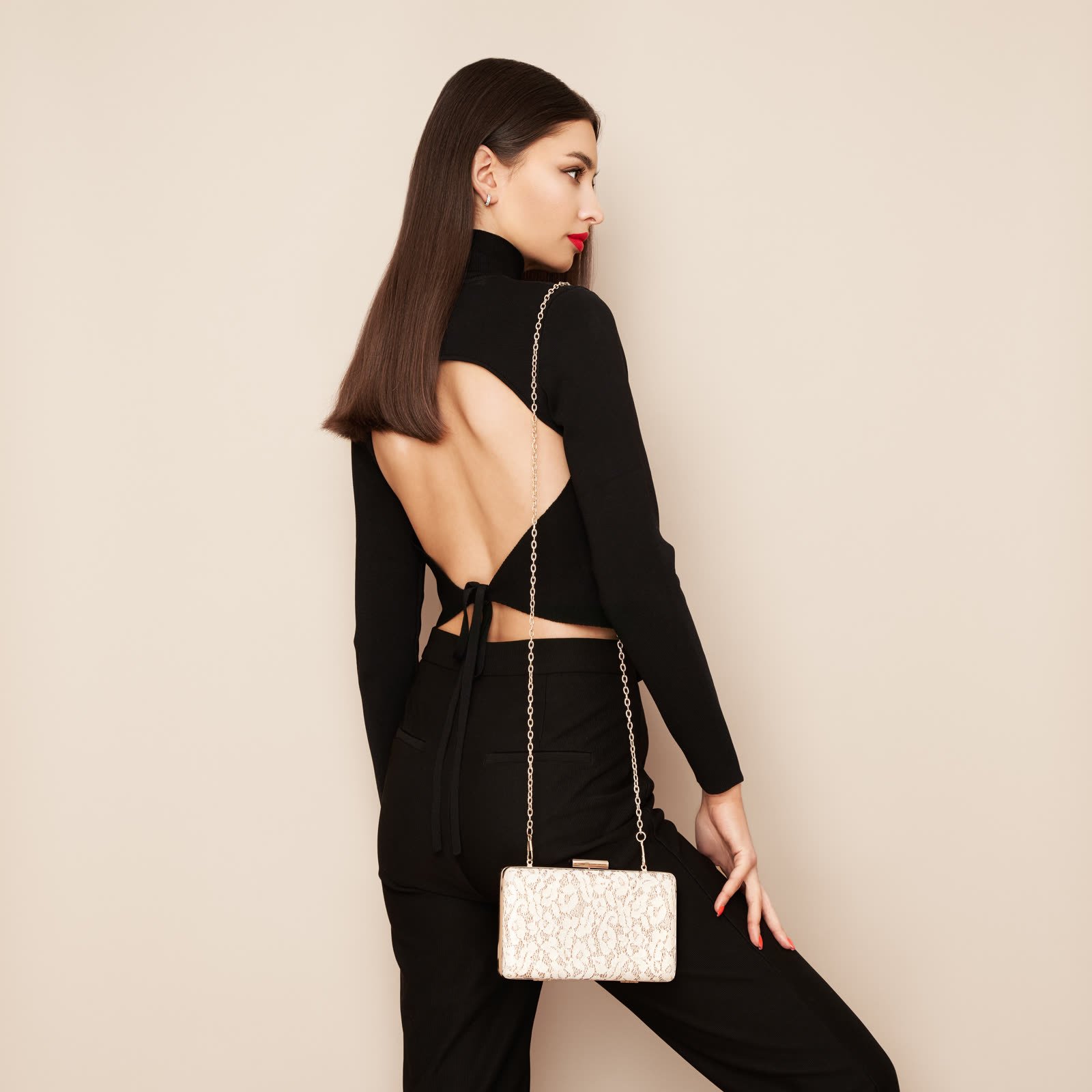
- Switch bags. A small clutch or top-handle bag finishes the transition.
A black blazer dress outfit styled this way works for many dress codes. Our cocktail attire for women guide covers when a tailored dress like this is appropriate.
The tuxedo dress: the formal version
A tuxedo dress is a blazer dress with evening details: satin lapels, satin-covered buttons and sometimes a satin stripe or trim. Like the 1986 Saint Laurent example, it reads as formal on its own and needs very little help.
Keep the styling clean. Sheer black tights or bare legs, a pointed heel, a slicked-back bun and red or deep berry lipstick echo the classic Le Smoking image. If the event is black tie optional, a floor-length coat or a lace layer underneath adds extra formality.
Fabric and colour choices
For year-round wear, wool crepe and lightweight wool suiting are the most versatile; they hold a crease-free line and do not cling. Linen blends work in summer but crease quickly. Satin or velvet suits evening only.
For a first blazer dress outfit, black is the obvious choice, but ivory, camel, navy and burgundy are all elegant. Pinstripe gives a city feel, while a soft check suits autumn days. Whatever you pick, a well-made blazer dress should last years, so prioritise lining, buttons and seam finishing over fashion details.
Our Lace-Cuff Blazer, from the first Notte & Noir collection, shows how a lace detail can soften sharp tailoring; you can see it in the first collection.